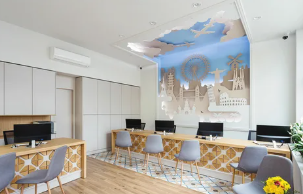
Guest-Centered Layout Thinking
We plan interiors around real travel behavior: luggage placement, circulation, charging access, compact dining, lighting comfort, and intuitive storage. That means rooms feel easier to use on the first night, not only prettier on arrival photos. Spaces are organized to reduce friction, support shorter adjustment time, and encourage stronger guest impressions from entry to check-out. Each corner is considered as part of a complete accommodation journey, helping owners turn design choices into measurable hospitality value rather than surface-level decoration alone.
Design Identity Tailored to Destination
Instead of generic rental styling, we shape a visual language rooted in local mood, architecture, natural light, and traveler expectations. This can mean warm Mediterranean textures, refined urban layering, or relaxed resort-inflected material palettes. The aim is always a property with a recognizable personality that feels connected to place while remaining timeless enough for longevity. Such identity helps listings stand out, supports memorable branding, and creates a stronger emotional link between guest experience and destination memory.
Durable Specifications for Frequent Turnover
Tourist interiors must withstand repeated use, fast cleaning cycles, and varying guest habits. We prioritize robust finishes, practical fabrics, easy-care surfaces, and furniture selections that maintain their appearance under regular hospitality pressure. This protects the aesthetic over time while reducing replacement headaches and upkeep costs. Owners gain interiors that remain attractive and operationally sensible, even in high-season occupancy patterns where wear accumulates quickly and visual consistency matters for long-term listing performance.
Styling with Commercial Awareness
We combine atmosphere with booking logic. Decorative details are selected not just for charm, but for photography impact, readability in online listings, and how they enhance perceived value. Contrast, texture, layered lighting, and intentional focal points help rooms appear richer and more memorable on booking platforms. This commercial awareness keeps the design grounded in hospitality outcomes, supporting stronger visuals without compromising comfort, maintenance practicality, or the everyday reality of operating a guest-ready property.
Consistent Multi-Room Experience
For properties with several units, we develop coherent systems rather than isolated room ideas. Shared color relationships, fixture logic, furniture language, and decorative rhythms create brand continuity across suites or apartments while still allowing each space to feel distinct. Guests perceive this consistency as professionalism and quality, while owners benefit from easier procurement and cleaner visual communication. The result is a portfolio of interiors that work together as one hospitality identity rather than a collection of unrelated rooms.
Clear Collaboration from Concept to Fit-Out
Our method turns broad ambitions into structured design direction. We guide concept development, mood definition, room-by-room priorities, furnishing choices, and practical execution recommendations with clarity and pace. This helps owners make confident decisions, align contractors or suppliers more effectively, and keep visual quality intact through implementation. By simplifying the path from idea to completed space, we reduce uncertainty and make the interior transformation process more controlled, more strategic, and easier to manage.